Aesthetics and Politics in Contemporary Palestinian Literature
Online | Tuesdays | 6-8pm | 3, 10, 17, 24 November | 1, 8 December
This course explores Palestinian literature through the work of different contemporary authors. The sessions are organised into three thematic blocks that engage not only with their writings but also with distinct perspectives within the struggle for Palestinian liberation.
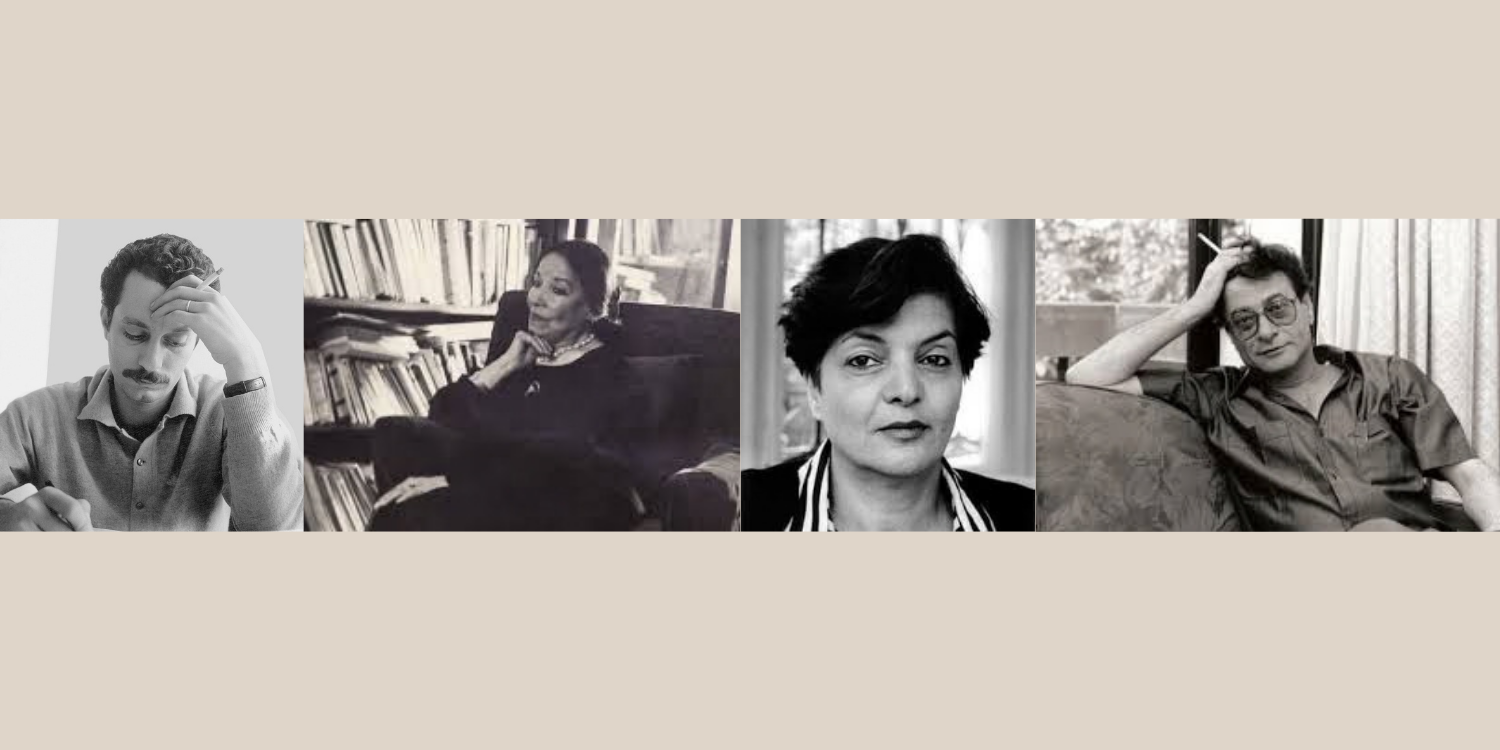
First, through Ghassan Kanafani’s work, we will examine the tensions between the literary ambitions of an avant-garde writer and the political urgency that shaped his role as an engaged author, exploring how aesthetic experimentation intersects with revolutionary commitment and the trace that his legacy left in other writers. Then, we will study how literature written by Palestinian female authors has intersected with the feminist currents within their society. Writers such as Sahar Khalifeh or Fadwa Tuqan will guide us to establish a rich dialogue with new generations, approaching Palestinian literature from an autonomous feminist perspective. Finally, the work of Mahmoud Darwish will guide an analysis of the construction of Palestinian identity, questioning essentialist notions while affirming Palestinians’ right to universality in the voice of younger poets.
Each author will be introduced within their historical and cultural context, along with an overview of their life and career. Selected excerpts will be read and analyzed from different theoretical perspectives. Relevant essays and documentaries will be recommended to complement the readings. The texts will be examined in relation to their literary and political contexts and each session will conclude with a brief summary of the main topics before moving on to questions, discussion, and open debate. Guest speakers will also join classes to share about their own work, including Maya Abu Al-Hayyat and more TBA.
Meet Your Tutor
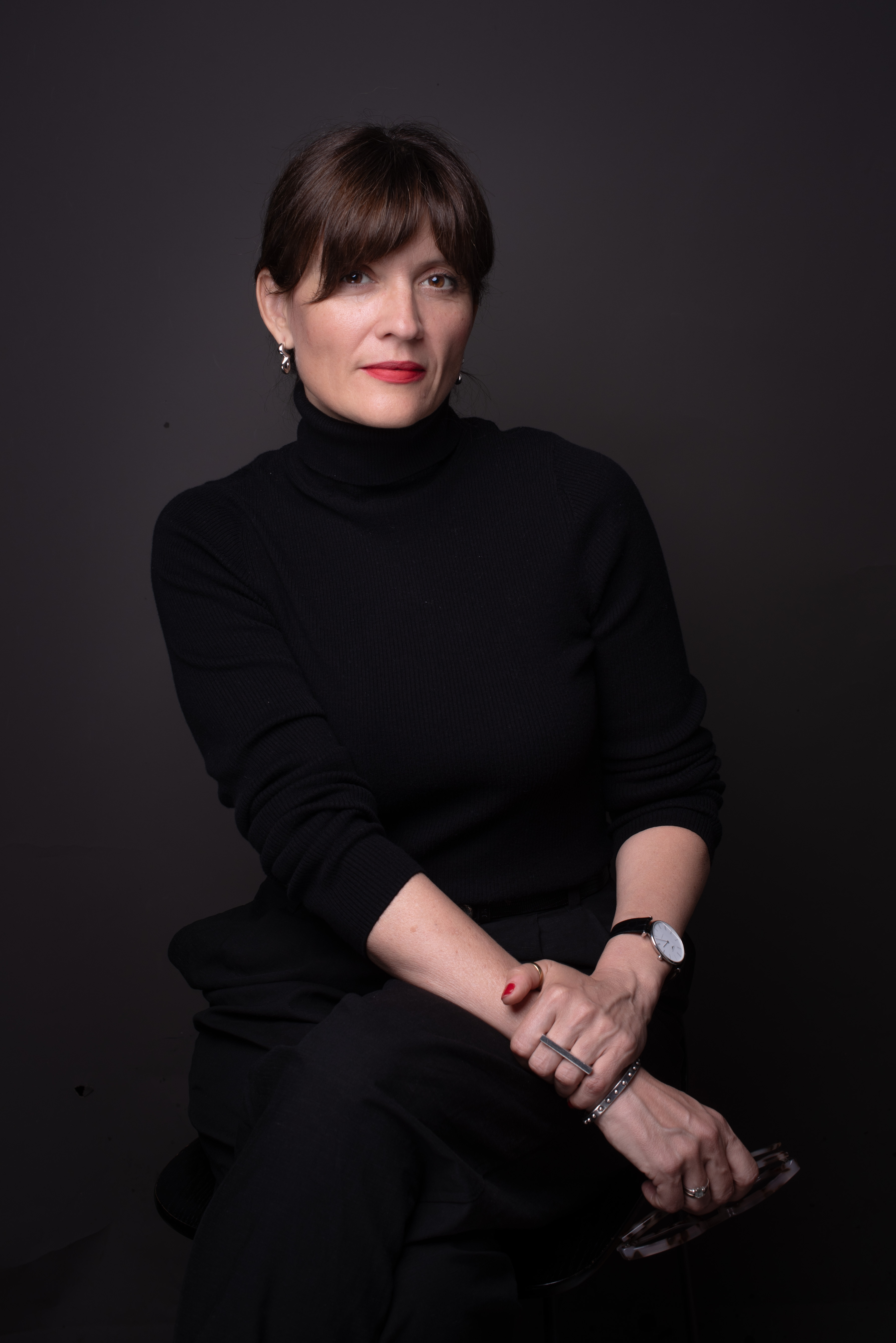
Vivi Alfonsín. Cuban writer and migrant rights activist based between Barcelona and London. She is the author of the stage plays Kleopatra o Infirmitas Sexus (2025) and Aguas Grises (2026), as well as the essay Violence and Death on the Frontiers, published by Errant Journal. She has published the novels Mundo Zurdo (2023) and Ningún otro infierno te espera (2026). She works as an educator and regularly contributes to newspapers and specialized journals focusing on social analysis. Her research interests include collective creation processes in performing arts within women’s prisons, the divulgation of contemporary Palestinian literature, and the advocacy against violence toward migrant people. She has a degree in Performing Arts and Social Action from the Institut del Teatre and postgraduate degree on Literature and Gender in Contemporary Asia and Africa at UNAM. In 2025, she was awarded the Montserrat Roig Writing Fellowship. Her work offers a feminist critique against racism and coloniality structures.
Who this course is for - a note from Vivi
"This course is open to all and is perfect for people interested in literature, politics and history - anyone who wants to understand the impact of literature in the Palestine identity and how Zionism has been constructed by narrative. Our aim is to foster a collective approach to Palestinian texts, provoking a debate to keep us denouncing and taking a clear public position against genocide."
Course Overview
All classes will be held through Zoom, accessed via the Teachable platform. Times listed are UK time. Classes are held live and will not be recorded.
Week 1 (3 November) & 2 (10 November). Ghassan Kanafani. Between aesthetic ambition and political urgency
Ghassan Kanafani was born in Acre in 1936 and was assassinated by a car bomb in Beirut on July 8, 1972, together with his niece. At the time of his assassination, he was not only a prominent member of the Popular Front for the Liberation of Palestine, but also an avant-garde writer in the field of narrative and extraordinarily lucid in his essays. He stands as a key figure not only for his political dimension, but also for his literary power: his precise writing, avant-garde in its forms and narrative techniques, and remarkable clarity in his essays. Moreover, his work allows us to reflect on the relationship between intimacy and history, between survival and desire, between language and territory, offering a way of understanding exile that avoids slogans and compels us to examine the material conditions of displacement.
Week 1: Political texts (excerpts)
Ghassan Kanafani. On Zionist Literature, 1967.
Ghassan Kanafani. The Revolution of 1936-1939 in Palestine.
Ghassan Kanafani. Selected Political Writings (1936-1972)
Interview by Richard Carleton.
Week 2: Narrative (excerpts)
Men in the Sun, 1936
All That's Left to You, 1966
Um Sa'ad, 1969
Return to Haifa, 1970
The Dupes trailer
Week 3 (17 November) & Week 4 (24 November): Feminist currents within Palestinian society
The political positioning of Palestinian women against the occupation has been constant even before the British Mandate ratified the Balfour Declaration in 1917. After the Nakba, women became part of the social and revolutionary processes of resistance and, without a doubt, their role has been crucial in organizing life devastated under the intensification of the Israeli genocide since October 2023.
These two sessions propose a journey through texts of contemporary Palestinian literature written by women, offering a historical and literary analysis of their creations within the heritage of their people and as part of the anti-colonial and anti-patriarchal struggle for liberation.
Authors such as Fadwa Tuqan, Samīra Azzām, Sahar Khalifeh, Nada Elia, Ahlam Bsharat, Ibtisam Azem, Adania Shibli, and Maya Abu al-Hayyat, among others, will allow us to establish a poetic and political cartography spanning a long historical trajectory. These are urgent contributions for understanding, through a feminist perspective, the impact of occupation, historical violence, and genocide.
Guest Speaker for Week 4
Maya Abu Al-Hayyat is a Beirut-born, Palestinian novelist and poet living in Jerusalem. She is the author of four collections of poems, including You Can Be the Last Leaf (Milkweed, 2022), translated by Fady Joudah; four novels, including the latest, No One Knows His Blood Type (Dar Al-Adab, 2013); and numerous children’s stories, including The Blue Pool of Questions (Penny Candy Books, LLC, 2017). Her work has appeared in A Bird Is Not a Stone: An Anthology of Contemporary Palestinian Poetry (Freight Books, 2014). She is also the editor of The Book of Ramallah: A City in Short Fiction (Comma Press, 2021). Abu Al-Hayyat is the director of Palestine Writing Workshop, an institution that seeks to encourage reading in Palestinian communities through creative writing projects and storytelling with children and teachers.
Week 5 (1 December) & Week 6 (8 December): Identity and Literature
The block Identity and Literature opens with a focus on Mahmoud Darwish, whose selected poetry and interviews offer a foundational exploration of identity, memory, and displacement, establishing a poetic and intellectual framework for what follows. His poetry, marked by lyrical intensity and a profound meditation on exile and belonging, weaves the personal and the collective into a singular voice that has become central to modern Arabic literature. Building on this, the following sessions turn to emerging and contemporary voices—often described as new “Trojan poets”—through selected readings from figures such as Refaat Alareer, Samer Abu Hawwash, Karim Kattan, Najwan Darwish, Ahlam Bsharat, Suheir Hammad, and Marwan Makhoul, alongside contributions featured in Banipal Magazine. Together, these works expand the conversation, offering diverse stylistic approaches and renewed perspectives on language, resistance, and the ongoing reconfiguration of literary identity.
Week 5: Mahmoud Darwish
Selected poetry and interviews
Week 6: New voices, new Trojan poets
Selected readings from Refaat Alareer, Banipal Magazine, Najwan Darwish, Ahlam Bsharat, Suheir Hammad, Marwan Makhoul, among others.
Guest Speaker for Week 6
Ahlam Bsharat is a Palestinian writer who grew up in a village in Northern Palestine. She completed her Master’s Degree in Arabic Literature at An-Najah National University in Nablus. Besides poetry, picture books, short stories, novels, and memoirs, she has written a number of television and radio scripts. Her books have received many awards and recommendations. Ismee Alharakee Farasha (translated into the English as Code Name: Butterfly) was included in the IBBY Honor List for 2012, a biennial selection of outstanding, recently published books from more than seventy countries. Ismee Alharakee Farasha and Ashjaar lil-Naas al-Ghaa’ibeen (translated into English as Trees for the Absentees) were both runners up for the Etisalat Award For Children’s Arabic Literature in 2013. Code Name: Butterfly was shortlisted for the UK-based Palestine Book Awards in 2017