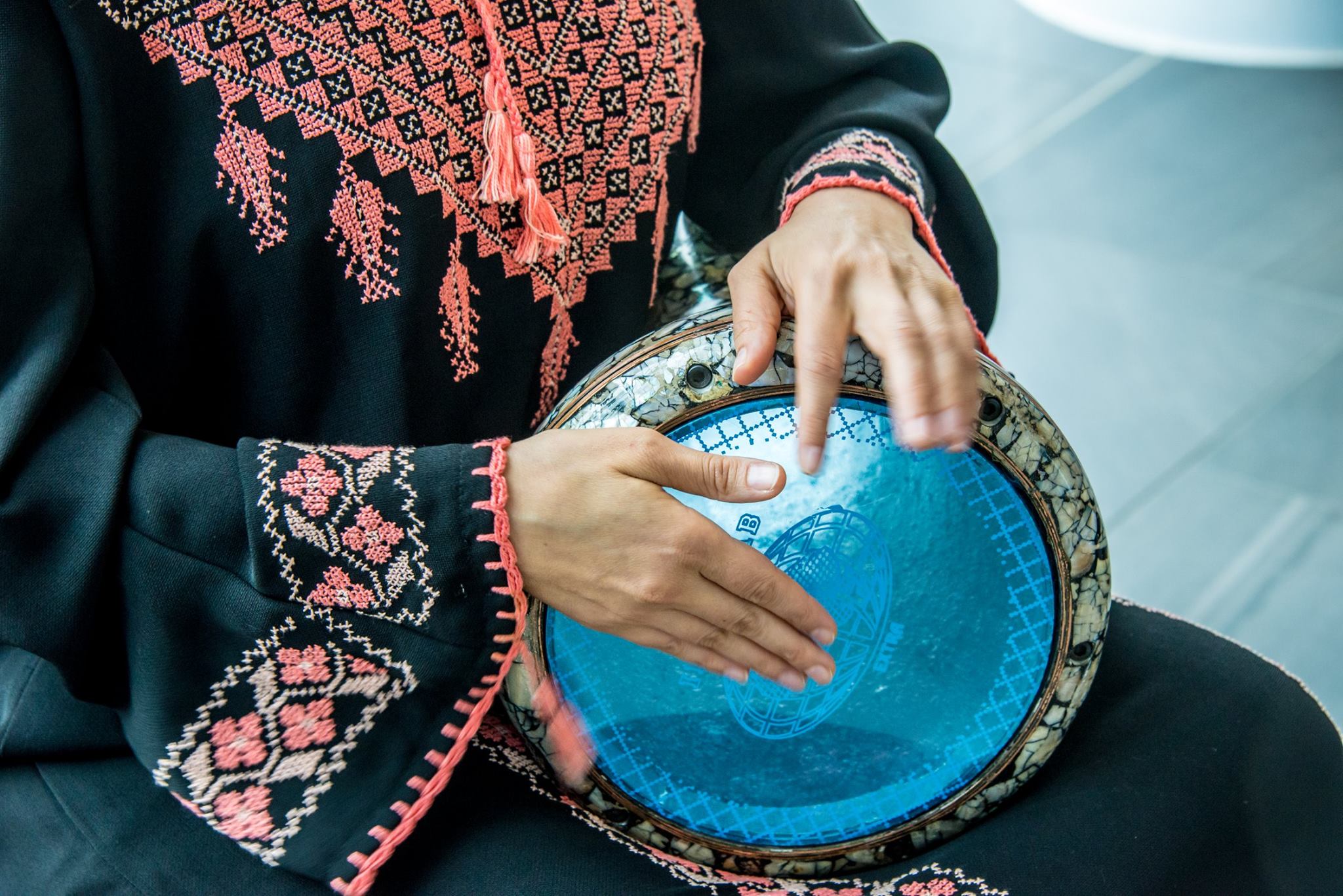
Taqasim Music School - Darbuka Courses
Taqasim Music School, based at The Arab British Centre in London, was established in 2011 to teach one of the most significant Oriental instruments called the Oud, among other instruments and disciplines that represent Middle Eastern Music, including the Darbuka, a drum with an ancient history and is widely used in the music of the Middle East and neighboring areas. The School was founded by the Iraqi Oud Master Ahmed Mukhtar who is the current director. What distinguishes the Taqasim Music School is its unique style. Its approach, both cultural and academic, is delivered by committed and experienced teachers.
Since its establishment, the school has been attracting students from different nationalities and cultural backgrounds. This development is reflected in the expansion of taught courses that cover different levels and topics including oud, darbuka and music literacy. This has contributed to the creation of an inclusive environment that promotes cultural exchange and awareness.
The name, Taqasim, is the word used in the context of Arabic music to represent the purest expression of the maqam music system. It requires deep knowledge of the history, theory, practice and spirit of this system, and playing Taqasim is the most advanced form of improvisation in the music of the Middle East.
Scroll down to see what Darbuka courses are available in the September - December term.
Want to meet the tutors or ask a question before signing up? Drop into the Taqasim Open Day on Saturday 4 September from 12pm-4pm at The Arab British Centre.
Please note bookings for all courses will close on Friday 18 September
Darbuka Beginners
Wednesday 5-7pm
23, 30 Sep | 7, 14, 21 Oct | 4, 11, 18, 25 Nov | 2 Dec
The darbuka (also doumbec, tabla and goblet drum) is a drum with an ancient history and is widely used in the music of the Middle East and neighboring areas. It is played with the hands and has a single “head”. Originally, it was made of baked clay and an animal-skin head. Modern versions are usually made of a light metal such as aluminum and have a plastic “head”.
This course will cover basic techniques such as the correct way to hold the darbuka, how to produce the correct tones (such as “dum” and “tak”) and the correct right and left-hand strokes. Students will learn a variety of popular rhythms such as Wahda, Maqsoum, Ayyub, Malfouf and Thurayya.
At the end of the course, students will have the option of progressing to the Darbuka Intermediate course.
Note: Students must have their own darbuka to practice between lessons.
Registration: £300 Register here
Course Book: Buy online
Darbuka Intermediate
Thursdays 5-7pm
24 Sep | 1, 8, 15, 22, Oct | 5, 12, 19, 26 Nov | 3 Dec
This course is open to returning students who have successfully completed the Darbuka Beginner to go to Intermediate level.
The course will focus on new complex rhythms and sound equality, keeping the beat and right tempo. They will also learn how to hum or sing along tunes while playing the darbuka and keeping time with the music. Students will also begin to explore the new complexities of rhythmic, hands coordination and new sounds.
Note: Students must have their own darbuka to practice between lessons.
Registration: £350 Register here
Course Book: Buy online here
Darbuka Upper Intermediate
Saturdays 7-9pm
24 Sep | 1, 8, 15, 22, Oct | 5, 12, 19, 26 Nov | 3 Dec
This course is open to returning students who have successfully completed the Darbuka Beginner & Intermediate courses. The course will focus on new complex rhythms and polyrhythms. Students will have the opportunity to play alongside recorded and live music, keeping the beat with songs. They will also learn how to hum or sing along tunes while playing the darbuka and keeping time with the music. Students will also begin to explore the complexities of rhythmic improvisation creating their own combinations of ornamentation of Taqasim.
Note: Students must have their own darbuka to practice between lessons.
Registration: £350 Register here
Course Book: Buy online
Darbuka Advanced Plus
Fridays 7-9pm
25 Sept | 2, 9, 16, 23 Oct | 6, 13, 20, 27 Nov | 4 Dec.
In this course darbuka advanced students will learn how to play solo applying improvisational rhythms while others simultaneously play a ground rhythm such as Maqsoum, Malfouf, Baladi etc.
Students will also begin practicing how to accompany the oud while performing different dynamics, precise tempo and accurate pulses within each rhythm.
Students will learn the accent in rhythms. Accent In music, is a stress or emphasis placed on a particular beat, making it stand out from the surrounding sounds. Accents can be achieved through beat’s dynamic changes (louder or softer) or (harder or lower). Accent play a crucial role in shaping rhythm and adding interest and expression to musical phrases.
Students will also explore more complex polyrhythms with ‘Hiwa’ and ornamentations with a focus on right-hand coordination and right -hand Mahbus. Additionally, students will also learn how to play with a recorded track, song or piece of music using the dynamics while maintaining a precise tempo throughout each piece.
Note: Students must have their own darbuka to practice between lessons.
Registration: £350 Register here
Course Book: Buy online
Darbuka Advanced Plus 2
Wednesdays 7-9pm
23, 30 Sep | 7, 14, 21 Oct | 4, 11, 18, 25 Nov | 2 Dec
This course is open to returning students who have successfully completed the Darbuka Advanced courses.
The course will focus on new complex rhythms and polyrhythms. Students will have the opportunity to play solo and improvisation also alongside recorded and live music, keeping the beat with songs. They will also learn how to hum or sing along tunes while playing the darbuka and keeping time with the music.
Students will progress the accent in rhythms. Accents can be achieved by right or left hand through beat’s dynamic changes. Accent plays a crucial role in shaping rhythm and adding interest and expression to musical phrases.
Students will also explore more complex polyrhythms with ‘Hiwa’ and ornamentations with a focus on right-hand coordination and right-hand Mahbus. Students will also begin to explore the complexities of rhythmic improvisation creating their own combinations of ornamentation.
Note: Students must have their own darbuka to practice between lessons.
Registration: £350 Register here
Course Book: Buy online
FAQs
Do I need my own instrument and where can I buy one?
You will need your own instrument so you can practice at home in between classes. Taqasim tutors will be able to advise you where you can buy your own oud and darbuka. We recommend signing up to Beginners courses at least a few weeks in advance of the courses starting to ensure you have time to procure an instrument and buy your course book.
When do the courses run?
We run courses three times a year, January – March, May – July and September – December.
Can I book a place and pay later?
No, your place on the course will only be confirmed on receipt of the course fee in full.
What is your refund policy?
Our courses rely on meeting minimum numbers to run, and are often over-subscribed, so the sooner you let us know you’ve changed your mind the better. We can then open your place up to someone else. Our rules on refunds are:
- Full refund (minus Stripe booking fees) if you let us know up to 2 weeks before the start date of the course
- 50% refund (minus Stripe booking fees) if you let us know 8-13 days before the start date of the course
- no refund if you let us know 1 week or less before the start of the course
For every booking made on our website we have to pay Stripe a small fee. If you request a refund, this fee will be deducted from your refunded amount.
What happens if you cancel the course?
We will endeavour to ensure courses are not cancelled but if this does happen we will contact you as quickly as we can to let you know and to arrange a full refund.
Please contact us if you have any further questions on 020 78321310 or info@arabbritishcentre.org.uk